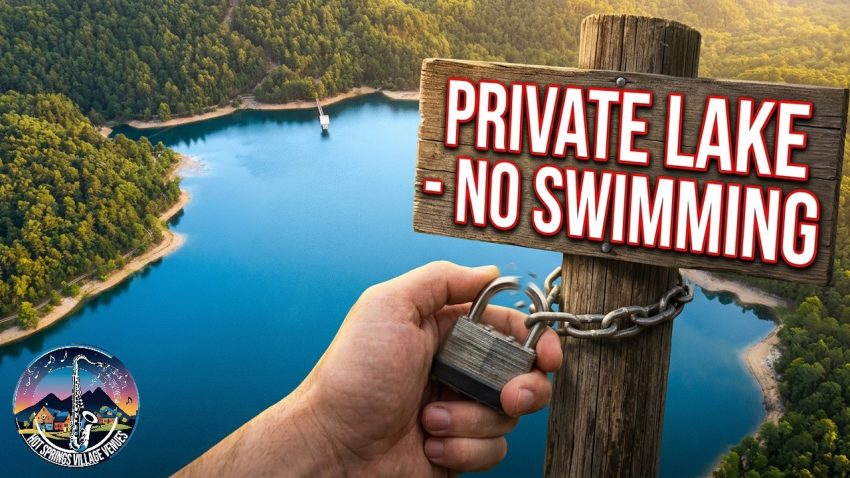
Lake Lago is one of the most fascinating yet least understood locations in Hot Springs Village, Arkansas. Unlike the community’s popular recreational lakes, this 76-acre reservoir remains entirely closed to boating, fishing, swimming, and every other form of public recreation. Its restricted status isn’t about secrecy—it exists to protect one of the area’s most valuable resources: clean drinking water.
Hidden among the scenic Ouachita foothills, Lake Lago serves as the community’s primary protected water reservoir. Every restriction surrounding the lake helps preserve exceptional water quality while ensuring a dependable supply for thousands of residents.
What Makes Lake Lago Different from Other Hot Springs Village Lakes?
Most lakes throughout Hot Springs Village are designed for recreation, welcoming anglers, kayakers, and boating enthusiasts throughout the year. Lake Lago follows an entirely different purpose.
Rather than supporting outdoor recreation, the reservoir functions as protected infrastructure. Keeping human activity away from the shoreline minimizes pollution, sediment disturbance, and contamination risks. This allows the ecosystem to remain remarkably undisturbed while maintaining naturally clean water.
Visitors can admire its peaceful beauty from a distance, but public access is intentionally prohibited to safeguard the community’s water source.
How Does Lake Lago Supply Water to Hot Springs Village?
Lake Lago was engineered more than five decades ago with long-term sustainability in mind. At the heart of the reservoir stands a 120-foot water intake tower designed to collect water efficiently while maintaining quality.
One of the lake’s greatest strengths is its storage capacity. Even if every other water source became unavailable, Lake Lago reportedly contains enough reserve water to support Hot Springs Village for approximately 18 months.
Its connection with the Middle Fork of the Saline River further strengthens long-term water resilience by helping maintain dependable supply during changing environmental conditions.
Why Are Environmental Protections So Important Here?
Protecting a drinking water reservoir requires strict management. Activities that are perfectly acceptable on recreational lakes can introduce contaminants, invasive species, fuel residue, litter, or excess nutrients into the water.
By eliminating recreational use entirely, Lake Lago remains a largely untouched ecosystem where wildlife and native vegetation continue to thrive naturally. These conservation measures reduce treatment costs while helping preserve consistently high water quality for residents.
The quiet shoreline reflects decades of careful planning rather than restricted access for its own sake.
What Is Changing Around Lake Lago Today?
Water management strategies continue evolving to improve sustainability. One notable change involves allowing portions of an aging waterfall berm to naturally deteriorate instead of replacing aging infrastructure.
This approach supports more natural water movement while reducing long-term maintenance requirements. Modern resource management increasingly favors solutions that work alongside natural processes rather than relying exclusively on engineered structures.
These decisions help prepare the community for future environmental challenges while protecting a dependable drinking water supply.
Why Is Lake Lago Worth Learning About?
Although visitors cannot explore Lake Lago in person, understanding its purpose provides valuable insight into how communities responsibly manage natural resources.
Behind its peaceful appearance lies decades of thoughtful engineering, environmental stewardship, and careful planning that quietly supports everyday life throughout Hot Springs Village.
The next time you enjoy a glass of clean water in the community, you’ll know it comes from one of Arkansas’ most protected and carefully managed lakes—a hidden resource working every day behind the scenes.
FAQs
1. Can the public visit Lake Lago?
No. Lake Lago is a private, non-recreational reservoir with no public access permitted.
2. Why is boating and fishing prohibited?
These activities are prohibited to protect drinking water quality and preserve the reservoir’s natural ecosystem.
3. How large is Lake Lago?
Lake Lago covers approximately 76 acres within Hot Springs Village, Arkansas.
4. What is the lake used for?
Its primary purpose is supplying and protecting drinking water for Hot Springs Village residents.
5. Where is Lake Lago located?
Lake Lago is located within the Ouachita foothills inside Hot Springs Village in Garland and Saline counties, Arkansas.