
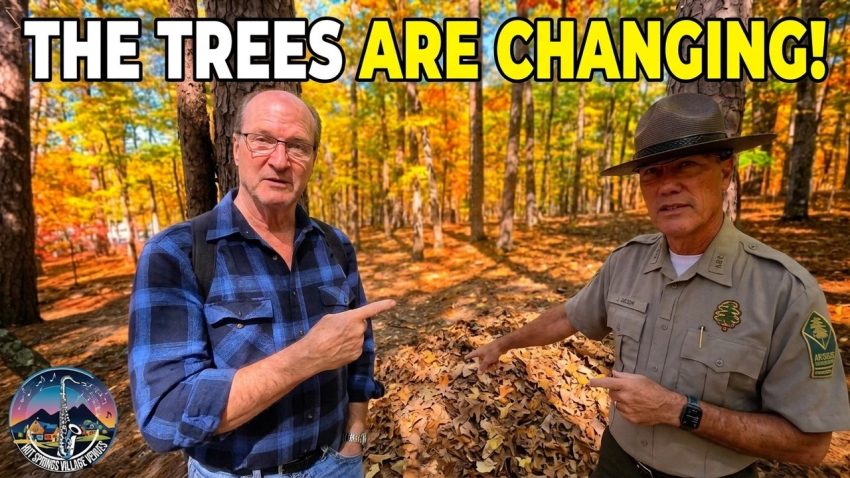
Why Are Arkansas Trees Changing So Fast in Fall 2026?
Quick Answer: Arkansas trees are experiencing noticeable seasonal changes in Fall 2026 because of drought stress, shorter daylight hours, and changing temperatures. Extreme dryness can cause premature browning and leaf drop, while autumn’s shorter days and cooler nights help reveal the yellow, orange, and red pigments hidden beneath green leaves. Visitors can explore these seasonal changes along the Dogwood Trail at Lake Ouachita State Park near Hot Springs, Arkansas.
Key Takeaway: Fall colors are more than a beautiful seasonal display. They reveal how trees respond to environmental stress, conserve water, and prepare for winter. Dennis R. Simpson and Lake Ouachita State Park Superintendent James Wilburn explain these natural processes and discuss why Arkansas state parks are valuable destinations for families, hikers, and nature enthusiasts.
Why Are Arkansas Trees Turning Brown Early in Fall 2026?
Arkansas’s dry conditions in 2026 have raised questions about the health and appearance of local trees. Why are some leaves turning brown before displaying their usual autumn colors?
The answer involves water conservation.
Trees continuously move water from their roots through their trunks and branches to their leaves. This process releases water vapor through tiny openings called stomata. It is known as transpiration.
When soil moisture becomes limited, trees respond by closing their stomata to reduce water loss. Prolonged drought can interfere with photosynthesis, stress the tree, and cause leaves to wilt, brown, or drop earlier than normal.
According to University of Minnesota Extension’s research-based guidance, drought-stressed trees can experience premature leaf drop and branch damage.
This means early brown leaves do not necessarily indicate normal autumn color development. They may be signs of environmental stress.
What Makes Arkansas Trees Change Color in Autumn?
The science behind fall foliage begins with chlorophyll, the green pigment responsible for capturing sunlight during photosynthesis.
During spring and summer, chlorophyll dominates the appearance of tree leaves. As autumn approaches, shorter daylight hours and changing temperatures trigger the breakdown of chlorophyll.
Other pigments become visible:
- Yellow: Carotenoids produce yellow shades.
- Orange: Different combinations of carotenoid pigments create orange tones.
- Red: Anthocyanins produce red and purple shades.
- Brown: Drying and deterioration of leaf tissues create brown coloration.
Cool nights and sunny autumn days can encourage stronger red coloration in certain tree species. However, there is no single temperature that guarantees peak fall colors.
Drought, rainfall, sunlight, tree species, and local conditions all influence the final display.
The U.S. Forest Service explains that daylight and temperature changes influence chlorophyll breakdown and the appearance of autumn pigments.
Does a Sudden Cold Snap Make Arkansas Fall Colors Brighter?
A sudden temperature drop can influence autumn foliage, but cold weather alone does not create beautiful fall colors.
The combination of environmental conditions matters:
- Shorter days signal trees to prepare for winter.
- Cooler temperatures contribute to seasonal changes in leaf chemistry.
- Sunny days help produce sugars in certain leaves.
- Cool nights can encourage anthocyanin production in some species.
- Adequate moisture helps support healthier foliage.
When drought is severe, leaves may turn brown or fall before producing vibrant colors.
For Arkansas residents and visitors, this explains why fall foliage can look different from one year to another.
What Can You See on the Dogwood Trail at Lake Ouachita State Park?
One of the highlights of Dennis R. Simpson’s visit is the Dogwood Trail at Lake Ouachita State Park, where he speaks with Superintendent James Wilburn about trees, forest ecology, and park conservation.
Located near Hot Springs, Arkansas, Lake Ouachita State Park offers visitors opportunities to experience wooded landscapes, lake scenery, wildlife, and outdoor recreation.
The official Arkansas State Parks information identifies the Dogwood Trail as an easy, half-mile loop near Camp Area B.
Visitors can enjoy:
- Walking through shaded woodland.
- Observing native trees and seasonal foliage.
- Photographing forest landscapes.
- Exploring the natural environment with children.
- Learning about local plants and wildlife.
The nearby Caddo Bend Trail provides another hiking option. It is a four-mile loop and offers a more challenging experience through hardwood forests and along the lake shoreline.
Who should visit?
| Visitor type | Recommended experience |
|---|---|
| Families with children | Easy Dogwood Trail |
| Casual walkers | Half-mile woodland loop |
| Experienced hikers | Caddo Bend Trail |
| Nature photographers | Forest and lake scenery |
| Wildlife enthusiasts | Woodland observation |
For families and casual visitors, the Dogwood Trail is a convenient starting point. Hikers looking for a longer adventure can consider Caddo Bend Trail.
Why Should Families Disconnect From Screens and Explore Nature?
Modern families spend considerable time using smartphones, computers, televisions, and other digital devices.
Arkansas State Parks offer an opportunity to replace some of that screen time with outdoor experiences.
Children can discover different tree species, observe wildlife, explore trails, and develop a greater appreciation for nature.
Outdoor activities can also encourage family conversations, curiosity, physical activity, and environmental awareness.
James Wilburn and Dennis Simpson discuss the importance of helping children and adults reconnect with the natural world.
Whether it is a short nature walk or a weekend camping trip, spending time outdoors offers families an opportunity to create meaningful experiences together.
What Is the History of Lake Ouachita State Park?
Lake Ouachita is one of Arkansas’s most important outdoor recreation destinations.
The U.S. Army Corps of Engineers constructed Blakely Mountain Dam, creating Lake Ouachita. Construction began in the late 1940s, and the lake was dedicated in 1956.
According to Arkansas State Parks, Lake Ouachita State Park was established in 1955 and occupies approximately 455 acres on the eastern end of the lake.
The lake itself covers approximately 40,000 surface acres at normal pool level and has about 975 miles of shoreline.
Today, visitors enjoy boating, fishing, camping, kayaking, hiking, and scenic lake views.
The park’s history demonstrates how water infrastructure, conservation, and recreation can work together to create valuable outdoor destinations.
What Are the Important Arkansas State Park Updates?
The conversation also explores Arkansas’s broader state park system and conservation destinations, including Blanchard Springs, Cossatot River State Park, and Lake Sylvia.
Here are three destinations worth knowing:
1. Blanchard Springs Caverns
Located in north-central Arkansas, Blanchard Springs Caverns is known for its underground limestone formations and guided cave experiences. It is an excellent destination for families interested in geology and natural history.
2. Cossatot River State Park-Natural Area
Cossatot River State Park protects an impressive natural landscape featuring rugged terrain, forest habitats, hiking trails, and challenging Class IV whitewater rapids. It is particularly appealing to experienced outdoor enthusiasts.
3. Lake Sylvia
Located in Perry County, Lake Sylvia is a popular recreation destination offering opportunities for swimming, camping, fishing, and enjoying the surrounding forest.
These destinations highlight the importance of protecting Arkansas’s natural resources while providing opportunities for outdoor education and tourism.
How Can You Plan a Fall Visit to Lake Ouachita State Park?
If you are planning an autumn visit, a little preparation can make your experience more enjoyable.
Use this simple checklist:
- Check local weather and recent rainfall.
- Confirm park access and trail conditions.
- Bring drinking water, especially during dry conditions.
- Wear comfortable walking shoes.
- Carry a camera or smartphone for nature photography.
- Supervise children along wooded trails and near the lake.
- Stay on marked trails and follow park regulations.
Fall foliage timing varies with weather and location, so check current conditions rather than assuming peak colors will occur on a particular date.
Watch Dennis Simpson’s Fall 2026 Arkansas Adventure
In this episode, Dennis R. Simpson joins Lake Ouachita State Park Superintendent James Wilburn on the Dogwood Trail to explore the science of fall foliage, drought-related tree stress, and the importance of outdoor recreation.
The conversation also covers the history of Lake Ouachita State Park, family-friendly nature experiences, and developments and conservation destinations across Arkansas.
Watch the video to discover why Arkansas trees are changing, what influences autumn colors, and why this is a great time to reconnect with nature.
For Hot Springs Village residents, Arkansas travelers, hikers, families, and nature enthusiasts, this episode offers an informative look at the natural beauty surrounding the Ouachita region.
Frequently Asked Questions (FAQs)
Q1. Why are Arkansas trees turning brown early in Fall 2026?
Extreme drought causes trees to conserve water by reducing transpiration and sometimes dropping leaves earlier than normal, resulting in premature browning.
Q2. What causes leaves to change color in autumn?
Shorter daylight hours and cooler temperatures slow chlorophyll production. As green pigments break down, yellow, orange, and red pigments become visible.
Q3. Where can you see fall foliage near Hot Springs, Arkansas?
Lake Ouachita State Park and its Dogwood Trail are excellent places to explore woodland scenery and seasonal foliage near Hot Springs.
Q4. What outdoor activities are available at Lake Ouachita State Park?
Visitors can enjoy hiking, camping, fishing, boating, wildlife watching, photography, and family-friendly nature activities.
Q5. What makes Cossatot River State Park special?
Cossatot River State Park-Natural Area is known for its rugged river scenery, natural landscapes, and challenging Class IV whitewater rapids.