
Why Did Arkansas Officials Ban the Only Solution for Lake DeSoto’s Toxic Algae Bloom?
The toxic algae bloom at Lake DeSoto in Hot Springs Village, Arkansas has raised an important question among residents and visitors alike: Why would Arkansas officials ban what appears to be the most effective way to eliminate harmful algae? The answer is more complicated than many people realize, and understanding it can help protect your family, pets, and the lakes that make Hot Springs Village such a desirable place to live and visit.
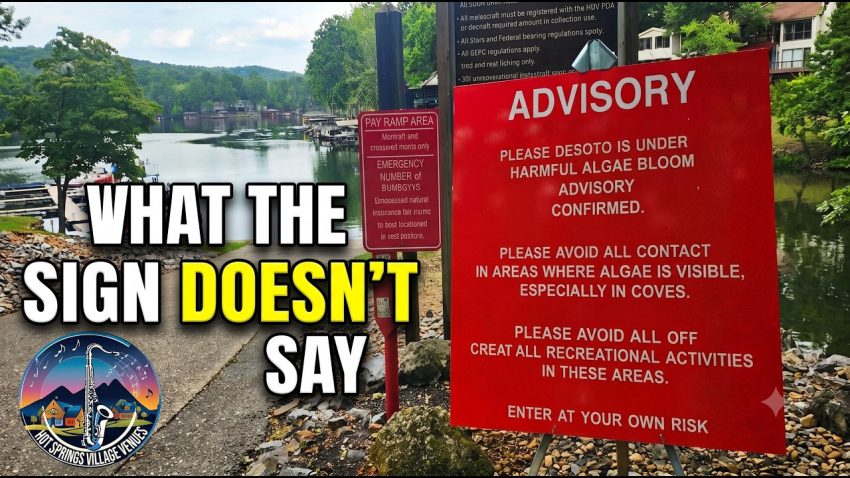
A bright red warning sign posted at Lake DeSoto tells visitors that harmful blue-green algae, also known as cyanobacteria, is present in the water. While the advisory is easy to notice, it doesn’t explain several critical facts that every lake user should know. Many assume the lake has been closed or that authorities simply need to apply chemicals to solve the problem. Neither assumption is correct.
Why Doesn’t Arkansas Simply Kill the Algae?
The Arkansas Department of Environmental Quality (ADEQ) discourages treatments that rapidly kill cyanobacteria during an active bloom because doing so can actually make the situation worse. When algae cells die suddenly, they rupture and release concentrated toxins into the surrounding water.
Instead of reducing the danger immediately, chemical treatments may temporarily increase toxin levels, creating greater risks for swimmers, boaters, wildlife, and especially pets. Water quality experts often recommend monitoring the bloom until environmental conditions improve naturally or until safer management options become available.
Is Lake DeSoto Actually Closed?
No. One of the biggest misconceptions is that Lake DeSoto has been completely closed to the public.
The advisory is intended to inform visitors of potential health risks rather than prohibit all recreational activities. Residents should continue following official guidance, avoid areas with visible algae accumulation, and stay informed as conditions change. Water conditions can improve or worsen depending on rainfall, temperature, sunlight, and nutrient levels.
Why Are Dogs at the Greatest Risk?
Dogs are significantly more vulnerable to toxic algae than people.
Unlike humans, dogs often drink directly from lakes while swimming. They may also retrieve toys through algae-covered water and later lick contaminated water from their fur or paws. Even relatively small amounts of cyanobacteria toxins can cause severe illness.
Symptoms may include vomiting, weakness, excessive drooling, difficulty breathing, seizures, liver damage, or even death if veterinary treatment is delayed. Pet owners should keep animals away from water that appears green, blue-green, or has floating scum, especially when advisory signs are posted.
Are Other Lakes in Hot Springs Village Affected?
Lake DeSoto is not necessarily the only lake that can experience harmful algae blooms.
The same environmental conditions that encourage cyanobacteria growth can affect multiple lakes throughout Hot Springs Village. Nearby lakes may experience similar issues depending on water temperature, nutrient runoff, limited circulation, and seasonal weather patterns.
Because lakes within the region often experience comparable environmental conditions, residents should remain aware of advisories issued for neighboring bodies of water rather than assuming only one lake is affected.
Is Lake Hamilton Also Seeing Similar Problems?
Lake Hamilton has also experienced reports of harmful algae conditions during periods of favorable environmental growth.
Although every lake has unique characteristics, warm temperatures, abundant sunlight, calm water, and excess nutrients create ideal conditions for cyanobacteria throughout Central Arkansas. Monitoring local advisories before swimming, boating, kayaking, or fishing remains one of the safest practices during the warmer months.
What Created This “Perfect Storm” for Toxic Algae?
Experts generally point to several environmental factors working together.
Extended periods of hot weather warm shallow water. Nutrients from fertilizers, stormwater runoff, and natural organic matter provide abundant food for algae growth. Limited water movement allows cyanobacteria to concentrate near the surface, where they receive maximum sunlight.
When these conditions occur simultaneously, algae populations can expand rapidly, producing blooms that trigger public health advisories.
What Should Residents and Visitors Do?
The best approach is awareness rather than panic.
Watch for official advisories, avoid visible algae mats, keep pets away from affected water, supervise children closely, and rinse off immediately after accidental exposure. Boaters, anglers, and kayakers can often continue enjoying the lakes safely by following current recommendations and avoiding contaminated areas.
Understanding why Arkansas restricts certain algae treatments helps explain that protecting public health sometimes means avoiding solutions that could unintentionally increase toxin levels. By staying informed and respecting advisory notices, residents and visitors can continue enjoying Hot Springs Village while minimizing unnecessary risks.
Frequently Asked Questions
1. Why did Arkansas ban chemical algae treatments?
Because rapidly killing cyanobacteria can release additional toxins into the water, temporarily making the health risk even greater.
2. Is Lake DeSoto closed because of the algae bloom?
No. The lake remains open, but visitors should follow advisory signs and avoid contact with visible algae.
3. Why is toxic algae dangerous for dogs?
Dogs often drink contaminated water and lick algae from their fur, increasing their exposure to dangerous cyanotoxins.
4. Can other Hot Springs Village lakes develop toxic algae?
Yes. Similar environmental conditions can cause harmful algae blooms in multiple lakes throughout the region.
5. What causes harmful blue-green algae blooms?
Warm temperatures, nutrient-rich runoff, sunlight, calm water, and favorable weather conditions combine to create ideal growing conditions.