
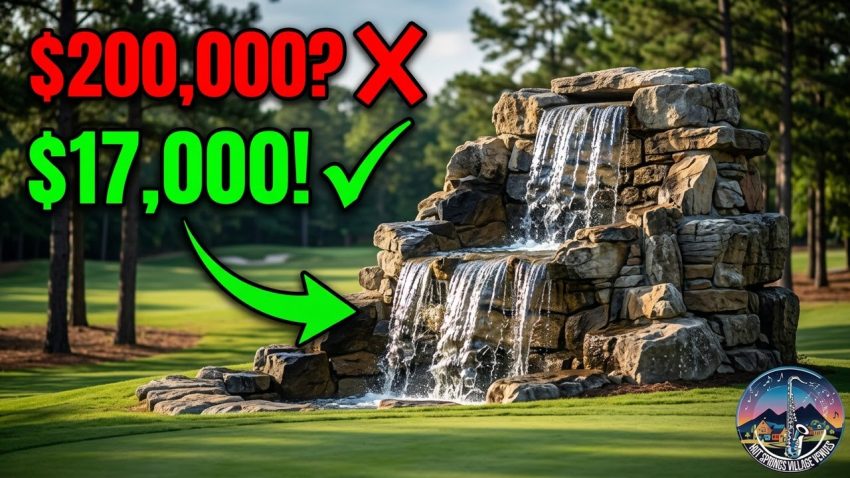
How Was a $200,000 Waterfall Built for Only $17,000?
One of the most fascinating stories in Hot Springs Village (HSV) history is the creation of the spectacular waterfall beside the 18th hole at Granada Golf Course. During an in-depth conversation, former HSV General Manager John Paul (JP) explained how a contractor estimated the project would cost nearly $200,000. Instead of accepting that price, the maintenance team found a far more creative solution.
Rock that had already been blasted during work on the Isabella Golf Course was reused to construct a stunning 500-foot waterfall. With skilled in-house labor and smart planning, the entire project was completed for roughly $17,000, proving that innovation often beats expensive construction contracts.
Why Did Hot Springs Village Shift from Growth to Maintenance?
Like many master-planned communities, Hot Springs Village eventually reached a point where expanding infrastructure became less important than maintaining what already existed.
JP explains that early development focused on building roads, golf courses, lakes, and amenities. Today, priorities include improving irrigation systems, resurfacing fairways, updating bunkers, and preserving community assets for future generations.
The COVID-19 golf boom reinforced the importance of investing in existing facilities, as golf became one of the few recreational activities people could safely enjoy.
Did Hot Springs Village Ever Have a Master Golf Plan?
Surprisingly, no.
One of the interview’s biggest revelations is that Cooper Communities never created one long-term master blueprint for every golf course.
Instead, courses were developed as opportunities arose and as land became available. Early developers reportedly sold lots from Cadillacs while future lakes and neighborhoods were still being planned.
This flexible development strategy helped shape today’s unique collection of golf courses across the Hot Springs Village.
What Makes the Clubhouse Restaurant So Unique?
Many visitors notice the unusual architecture without knowing its story.
JP explains the clubhouse restaurant uses a modular Hexodome design, an innovative architectural system popular during its construction era.
The interview also reveals why the clubhouse was relocated, how the famous golf cart tunnel was built, and the engineering challenges involved in connecting facilities across the property.
These behind-the-scenes stories add another layer to Hot Springs Village history.
Which Golf Courses Offer the Best Experience Today?
While Granada and Isabella receive plenty of attention, JP believes golfers should not overlook Magellan and Coronado.
Magellan evolved from a modest three-hole teaching facility into a respected 18-hole course that often delivers a private-club atmosphere.
Coronado’s executive layout provides an excellent option for players seeking shorter rounds, beginners developing their game, or experienced golfers wanting a relaxing afternoon.
The discussion also covers ongoing improvements at Cortez, including irrigation upgrades, bunker renovations, fairway resurfacing, and the never-ending challenge of controlling Canada geese around the courses.
Why Does This Story Matter?
The history of Hot Springs Village isn’t just about golf.
It’s a story of creative problem-solving, responsible budgeting, community planning, and dedicated leadership. The famous $17,000 waterfall perfectly illustrates how vision and resourcefulness can create lasting landmarks without enormous spending.
Whether you’re a golfer, homeowner, history enthusiast, or considering relocating to Hot Springs Village, these stories provide valuable insight into one of Arkansas’ most unique communities.
Frequently Asked Questions
1. How much did the Granada waterfall actually cost?
The famous waterfall was completed for approximately $17,000 using reclaimed rock and in-house construction rather than a contractor’s $200,000 estimate.
2. Who is John Paul (JP)?
John Paul is a former two-time General Manager of Hot Springs Village who played a major role in the community’s golf development and infrastructure projects.
3. Why did HSV move into a maintenance phase?
As the community matured, preserving roads, golf courses, utilities, and amenities became a higher priority than large-scale expansion.
4. Which HSV golf courses are underrated?
JP highlights Magellan and Coronado as excellent courses offering enjoyable layouts and less crowded play.
5. What is the Hexodome clubhouse?
The clubhouse restaurant features a modular Hexodome architectural design, making it one of the Village’s most distinctive buildings.